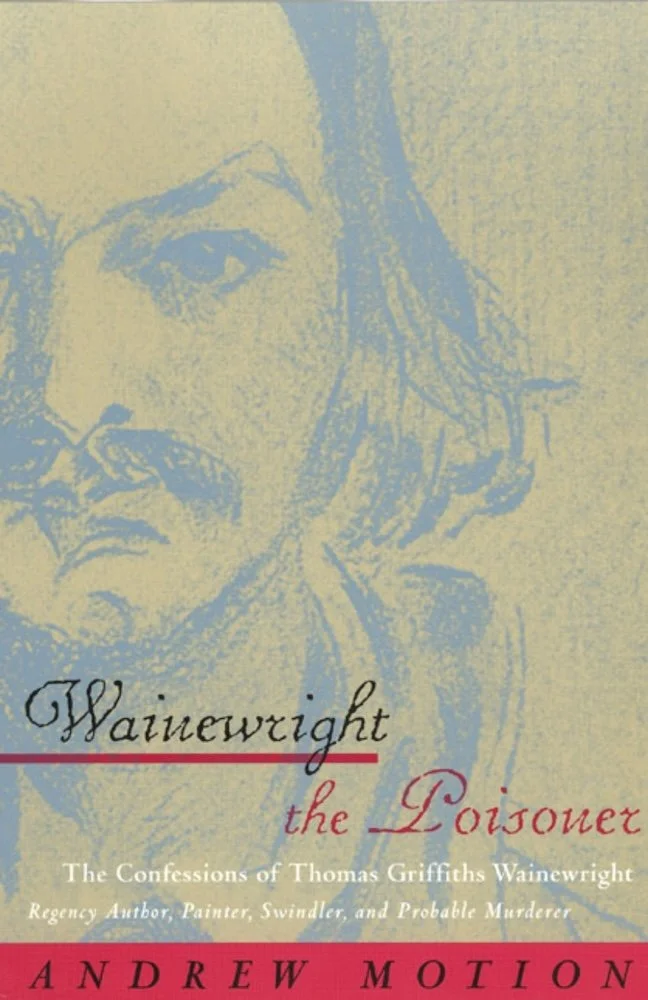
Reviews: ‘Wainewright the Poisoner’ by Andrew Motion
Thomas Griffiths Wainewright (1794-1847), the little-known subject of Andrew Motion’s intriguing book, was a significant figure in the London of his times: artist and writer, he painted Byron and was a friend of Fuseli and Blake. The form of the narrative is as beguiling as the subject matter. Eschewing straight biography, Motion writes the ‘Confession’ from the fictionalised first-person viewpoint of Wainewright.
At the end of each chapter, he adds ‘Notes’ – scholarly, biographical information about the real Wainewright. This ‘creates a fascinating alternative perspective to the vivacious but chilling story of the gentleman-dandy artist. After the suspicious death of three relatives, he was charged, though only with the forgery of life insurance documents and transported to Tasmania. Wilde wrote about him, spookily foreshadowing his own downfall.
This mixed-genre study produces a complex reconstruction of its subject, and reinstates Wainewright in his Romantic context.